

Pelé: The History and Record of Football’s Greatest Icon
Meta Description:
Explore the complete history and playing record of Pelé, the legendary Brazilian footballer. From his humble beginnings to three World Cup triumphs, this in-depth blog covers Pelé’s career, achievements, and lasting legacy in world football.
Pelé: The History and Record of Football’s Greatest Icon
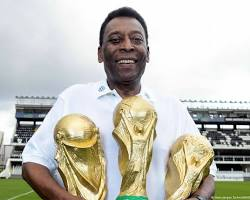
When people speak about the greatest footballer of all time, one name inevitably rises above generations, debates, and statistics: Pelé. Known as O Rei (The King), Pelé was more than just a prolific goal scorer—he was a global symbol of football’s beauty, creativity, and power to unite people. His playing career, spanning over two decades, reshaped the sport and set records that still stand today.
This blog explores the full history of Pelé’s playing career, from his early life in Brazil to his extraordinary records, international success, and enduring legacy.
Pelé: The History and Record of Football’s Greatest Icon…
Early Life and Introduction to Football
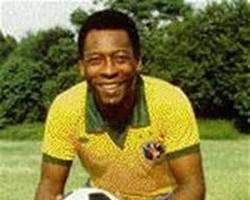
Pelé was born Edson Arantes do Nascimento on October 23, 1940, in Três Corações, Minas Gerais, Brazil. Raised in poverty, Pelé learned football on the streets, often playing with makeshift balls made of socks or rags. His father, João Ramos do Nascimento (known as Dondinho), was a professional footballer whose career was cut short by injury, but he passed his love for the game to his son.
From a young age, Pelé showed remarkable technical ability, balance, and intelligence. He joined the youth team of Bauru Athletic Club, where he was coached by former Brazilian international Waldemar de Brito. De Brito famously declared that the young Pelé would become the greatest footballer in the world—a prophecy that soon came true.
Pelé: The History and Record of Football’s Greatest Icon.
Breakthrough at Santos FC
At just 15 years old, Pelé signed for Santos FC, one of Brazil’s top clubs. He made his professional debut in 1956 and scored in his very first match. It didn’t take long for him to become the focal point of the team.
Domestic Dominance
Pelé’s impact at Santos was immediate and sustained:
- He led Santos to six Brazilian league titles (Taça Brasil and later Campeonato Brasileiro).
- Santos won 10 São Paulo State Championships during his time.
- The club became a global powerhouse, touring Europe, Africa, and the Americas.
Pelé’s presence transformed Santos from a strong Brazilian side into an international attraction. Stadiums around the world sold out simply to watch him play.
Copa Libertadores and Intercontinental Glory
Pelé guided Santos to back-to-back Copa Libertadores titles in 1962 and 1963. He also starred in the Intercontinental Cup, where Santos defeated European champions Benfica and AC Milan, cementing Pelé’s reputation as the best player in the world.
Pelé: The History and Record of Football’s Greatest Icon…
Record-Breaking Goal Scorer
One of Pelé’s most famous achievements is his extraordinary goal-scoring record.
- 1,283 goals in 1,367 matches (including friendlies and exhibition games)
- 757 official goals, placing him among the top goal scorers in football history
- Multiple seasons with over 40 goals
While modern debates sometimes question the inclusion of friendly matches, it’s important to note that many of those games were played against elite clubs under intense competition. Regardless of methodology, Pelé’s goal output remains staggering.
Brazil National Team Career
Pelé’s international career is perhaps the most defining aspect of his legacy.
1958 World Cup—A Teenage Sensation
At just 17 years old, Pelé made his World Cup debut in Sweden. After recovering from injury, he scored twice in the final against the host nation, helping Brazil win their first-ever World Cup. His combination of flair, composure, and athleticism stunned the football world.
1962 World Cup – Champion Despite Injury
Pelé entered the 1962 World Cup as the world’s biggest star. Although he was injured early in the tournament, his performances in the opening matches were decisive. Brazil went on to win the trophy, making Pelé a two-time World Cup winner.
1966 World Cup—A Tournament of Frustration
The 1966 World Cup in England was a difficult experience. Pelé was heavily targeted by aggressive defenders and suffered injuries, and Brazil was eliminated in the group stage. After the tournament, Pelé briefly considered retiring from international football.
1970 World Cup—Football Perfection
Pelé returned stronger for the 1970 World Cup in Mexico, widely regarded as the greatest team performance in football history. Brazil played attacking, expressive football, and Pelé was at the heart of it.
- He scored four goals in the tournament.
- Provided iconic assists, including the famous pass to Carlos Alberto in the final.
- Lifted his third World Cup trophy, a record no other player has matched.
Brazil’s 1970 team is still celebrated as the gold standard of international football, and Pelé was its leader.
Playing Style and Innovation
Pelé was a complete footballer. Unlike many specialists, he excelled in every aspect of the game:
- Finishing: Equally deadly with both feet and his head
- Dribbling: Quick, powerful, and unpredictable
- Vision: Created chances with intelligent passing
- Athleticism: Strong, fast, and remarkably agile
- Composure: Calm in decisive moments
He popularized techniques such as the feint, improved aerial play for forwards, and demonstrated that flair could coexist with efficiency. Pelé redefined what it meant to be a forward.
Move to New York Cosmos and Football in the USA
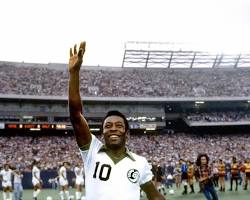
In 1975, Pelé signed for the New York Cosmos in the North American Soccer League (NASL). At the time, football was a minor sport in the United States, but Pelé’s arrival changed everything.
- Attendance figures skyrocketed.
- Media coverage increased dramatically.
- Football gained mainstream attention in North America.
Pelé led the Cosmos to the 1977 NASL Championship and retired shortly afterward. His final match was an emotional exhibition between Santos and the Cosmos, symbolizing the two clubs that defined his career.
Career Statistics and Honors
Club Honors
- 6× Brazilian League titles
- 10× São Paulo State Championships
- 2× Copa Libertadores
- 2× Intercontinental Cups
International Honors
- 3× FIFA World Cup winner (1958, 1962, 1970)
- 92 caps for Brazil
- 77 international goals
Individual Achievements
- FIFA Player of the Century (co-winner)
- Ballon d’Or Honorary Award
- Time Magazine’s 100 Most Important People of the 20th Century
Cultural Impact and Global Legacy
Pelé’s influence extended far beyond football. He became a global ambassador for sport, peace, and Brazil’s cultural identity. During Santos’ tours, ceasefires were reportedly declared in conflict zones so people could watch Pelé play.
He inspired generations of players, including legends such as Diego Maradona, Zinedine Zidane, Lionel Messi, and Cristiano Ronaldo, all of whom have acknowledged his influence.
Pelé also worked extensively with charities, FIFA, and UNESCO, using football as a tool for social change.
Conclusion: Why Pelé’s Record Still Matters
Pelé’s playing career cannot be measured by statistics alone. While his goals, titles, and records are extraordinary, his true greatness lies in how he transformed football into a global spectacle. He combined artistry with efficiency, humility with fame, and success with joy.
More than half a century after his peak, Pelé remains the benchmark against which all footballers are judged. His career record tells the story of excellence, but his legacy tells the story of football itself.
Pelé was not just a player of his era—he was, and remains, the King of Football.