


From their dramatic 1954 debut to the legendary 2002 semi-final run, explore the iconic moments and underdog stories of Turkey’s World Cup history.
Turkey’s Football World Cup History
1.Turkey’s Football World Cup History

##Turkey’s Football World Cup History
The story of the Turkish national football team in the FIFA World Cup is one of resilience, passion, and unforgettable moments. Although Turkey has not been a regular participant in the tournament, the country has produced some memorable performances that remain deeply etched in football history. From their early struggles to the remarkable success of the 2002 FIFA World Cup, Turkey’s World Cup journey reflects the growth of football in the nation and the determination of its players and supporters.
Turkey’s Football World Cup History
Turkey’s relationship with football dates back to the late Ottoman period when the sport was introduced by British residents and merchants. Over time, football became the most popular sport in the country, leading to the establishment of strong domestic clubs and a passionate fan culture. However, success on the international stage took decades to achieve.
2.Turkey’s First World Cup Appearance
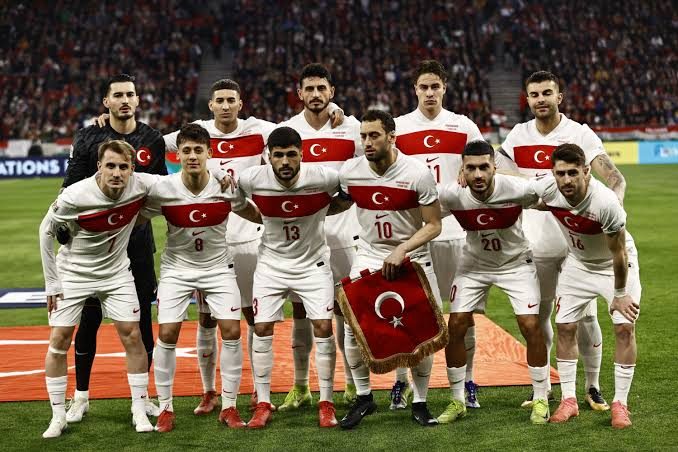
Turkey first qualified for the FIFA World Cup in 1954. The tournament was held in Switzerland, and it marked a historic moment for Turkish football. Qualification itself was unusual and memorable. Turkey and Spain finished level during the qualification process, forcing a playoff match. After the playoff also ended in a draw, the winner was decided by drawing lots. A young Italian boy selected Turkey’s name from a bowl, sending the Turkish team to their first World Cup.
Turkey’s Football World Cup History…
The 1954 tournament was challenging for Turkey. They were placed in a difficult group alongside West Germany, Hungary, and South Korea. Turkey managed to defeat South Korea 7-0, recording their first World Cup victory in spectacular fashion. However, heavy defeats to West Germany prevented them from advancing further in the tournament.
Turkey’s Football World Cup History
Despite the early exit, the experience was valuable for Turkish football. It demonstrated that Turkey could compete internationally and laid the foundation for future ambitions.
3.Decades of Absence
After the 1954 World Cup, Turkey endured a long absence from the tournament. For nearly half a century, the national team struggled to qualify. During this period, Turkish football experienced moments of promise, but consistency remained a problem.
Several factors contributed to Turkey’s difficulties. European qualification campaigns were highly competitive, and Turkey often lacked the infrastructure and experience needed to challenge stronger football nations. While domestic football clubs such as Galatasaray S.K., Fenerbahçe S.K., and Beşiktaş J.K. grew in popularity and strength, the national team struggled to translate domestic success into international achievements.
Turkey’s Football World Cup History
Nevertheless, Turkish football slowly improved during the 1990s. Better youth development systems, improved coaching methods, and the emergence of talented players helped the national team become more competitive. The team narrowly missed qualification for several major tournaments, signaling that progress was underway.
4.The Golden Generation and the 2002 FIFA World Cup

Turkey’s greatest football achievement came during the 2002 FIFA World Cup in South Korea and Japan. Under the leadership of coach Şenol Güneş, Turkey produced a stunning campaign that captured the attention of football fans worldwide.
The squad featured talented and disciplined players, including Hakan Şükür, Rüştü Reçber, Hasan Şaş, İlhan Mansız, and Emre Belözoğlu. This generation combined technical skill, tactical discipline, and determination.
Turkey’s Football World Cup History
Turkey was placed in Group C alongside Brazil, Costa Rica, and China. Their opening match against Brazil was highly competitive. Turkey performed admirably but lost 2-1 after a controversial penalty decision. Despite the defeat, the performance showed that Turkey could compete with the world’s best teams.
Turkey then drew 1-1 with Costa Rica before defeating China 3-0 to qualify for the knockout stage. It was a historic achievement, as Turkey had reached the second round of the World Cup for the first time.
5.Knockout Stage Success
In the Round of 16, Turkey faced Japan, one of the host nations. A disciplined performance and an early goal secured a 1-0 victory for Turkey, sending them to the quarterfinals.
The quarterfinal against Senegal was another dramatic encounter. The match remained scoreless until extra time when İlhan Mansız scored a golden goal, giving Turkey a 1-0 win and a place in the semifinals.
Turkey’s semifinal opponent was Brazil once again. Although Turkey played bravely, Brazil won 1-0 thanks to a goal from Ronaldo. Despite the loss, Turkey had already exceeded expectations and earned worldwide admiration for their performances.
6.Third-Place Finish
Turkey faced South Korea in the third-place playoff match. The game became historic almost immediately when Hakan Şükür scored after only 11 seconds, setting the record for the fastest goal in FIFA World Cup history. Turkey won the match 3-2 and secured third place in the tournament.
Turkey’s Football World Cup History
The 2002 FIFA World Cup remains the greatest achievement in Turkish football history. The team displayed exceptional teamwork, resilience, and tactical intelligence throughout the competition. Their success united the nation and inspired a new generation of footballers.
7.Impact on Turkish Football
Turkey’s success in 2002 had a major impact on football in the country. Interest in youth academies increased, and Turkish clubs invested more in player development. The achievement also enhanced the international reputation of Turkish football.
Several players from the 2002 squad gained international recognition and moved to European clubs. Turkish football fans became even more passionate, and expectations for future tournaments rose significantly.
Turkey’s Football World Cup History
The success also highlighted the importance of strong leadership and organization within the national team setup. Şenol Güneş was praised for building a disciplined and united squad capable of competing against elite football nations.
8.Challenges After 2002
Following the remarkable 2002 campaign, Turkey struggled to maintain the same level of consistency. Although the national team qualified for UEFA Euro 2008 and reached the semifinals, World Cup qualification remained difficult.
Turkey failed to qualify for the FIFA World Cup tournaments in 2006, 2010, 2014, 2018, and 2022. Competition within European qualification groups became increasingly intense, and Turkey often fell short against stronger opponents.
Despite these setbacks, Turkish football continued to produce talented players. Football remains deeply rooted in the country’s culture, and the national team still enjoys massive support from fans.
9.Famous Turkish World Cup Players
Several Turkish footballers became national heroes because of their World Cup performances. Hakan Şükür remains one of Turkey’s greatest strikers and is remembered for his record-breaking goal against South Korea. Goalkeeper Rüştü Reçber earned praise for his reflexes and leadership during the 2002 tournament.
Hasan Şaş impressed fans with his creativity and attacking ability, while İlhan Mansız became famous for scoring crucial goals during the knockout stages. These players helped establish Turkey as a respected football nation on the global stage.
Turkey’s Football Identity
Turkey’s World Cup history reflects the nation’s football identity: passionate, determined, and resilient. Turkish fans are known for creating intense atmospheres, and the national team often performs with great emotion and pride.
Although Turkey has only appeared in two FIFA World Cups, their impact has been significant. The 2002 campaign remains one of the most memorable underdog stories in World Cup history.
Turkey’s Football World Cup History
As Turkish football continues to evolve, fans hope the national team can return to the FIFA World Cup and recreate the magic of 2002. With talented young players emerging and football infrastructure improving, the dream of another successful World Cup run remains alive.
Turkey’s Football World Cup History
Turkey’s World Cup history may not be filled with frequent appearances, but it is defined by unforgettable moments, legendary players, and a spirit that continues to inspire football supporters across the world.