

Meta Description
Learn the basic rules and fundamental techniques of badminton, including scoring, court layout, grips, strokes, footwork, and essential skills for beginners to improve their game.
Basic Rules and Fundamental Techniques of Badminton
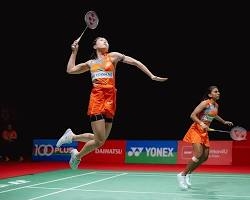
Badminton is one of the most popular racket sports in the world, known for its fast pace, agility, and strategic play. Played both recreationally and competitively, badminton improves physical fitness, coordination, reflexes, and mental focus. Whether you are a beginner learning the game for the first time or someone looking to strengthen your foundation, understanding the basic rules and fundamental techniques of badminton is essential.
This blog explains the core rules of badminton along with the fundamental skills every player should master to play confidently and effectively.
Basic Rules and Fundamental Techniques of Badminton…
Introduction to Badminton
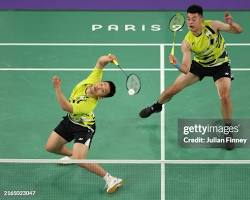
Badminton is played using a racket and a shuttlecock (also called a birdie). The objective of the game is to hit the shuttlecock over the net and land it within the opponent’s court in such a way that they cannot return it successfully. The game can be played in three formats: singles (one player on each side), doubles (two players on each side), and mixed doubles (one male and one female player on each side).
Badminton is governed internationally by the Badminton World Federation (BWF), which sets standardized rules for gameplay, scoring, and equipment.
Basic Rules of Badminton
Understanding the rules is the first step to playing badminton correctly and fairly.
Basic Rules and Fundamental Techniques of Badminton…
1. Court and Equipment
A badminton court is rectangular and divided by a net placed at the center.
- Court length: 13.40 meters
- Court width:
- Singles: 5.18 meters
- Doubles: 6.10 meters
- Net height:
- 1.55 meters at the posts
- 1.524 meters at the center
The main equipment used in badminton includes:
- A badminton racket (lightweight with a long handle)
- A shuttlecock, made of feathers or synthetic material
2. Scoring System
Modern badminton follows the rally scoring system.
- A match consists of best of three games.
- Each game is played to 21 points.
- A point is scored on every rally, regardless of who serves.
- A player or team must win by at least 2 points.
- If the score reaches 29–29, the side that scores the 30th point wins the game.
3. Serving Rules
Serving is a crucial part of badminton and must follow specific rules:
- The shuttlecock must be hit below the server’s waist.
- The racket shaft must point downward at the time of contact.
- Both feet of the server must remain stationary and inside the service court.
- In singles, the server serves from:
- Right service court when the score is even
- Left service court when the score is odd
In doubles, the service court also depends on the server’s score, but service rotation rules apply.
4. Faults in Badminton
A fault results in a point for the opponent. Common faults include:
- Shuttle landing outside the court boundaries
- Shuttle passing through or under the net
- Hitting the shuttle twice in succession
- Touching the net with the racket or body
- Illegal serve
- Player obstructing the opponent
5. Intervals and Change of Ends
- Players are allowed a 60-second interval when one side reaches 11 points in a game.
- A 2-minute break is given between games.
- Players change ends after each game and during the third game when one side reaches 11 points.
Fundamental Techniques of Badminton
To play badminton effectively, players must develop strong fundamental techniques. These techniques form the foundation for advanced skills and strategies.
1. Gripping the Racket
A correct grip is essential for control, power, and injury prevention.
Forehand Grip
- Hold the racket as if shaking hands with it.
- Keep the grip relaxed, not tight.
- The thumb and index finger should form a “V” shape along the bevel of the handle.
Backhand Grip
- Similar to the forehand grip, but the thumb is placed flat against the wider surface of the handle.
- This grip helps generate power during backhand strokes.
A relaxed grip allows quicker wrist movement and better shot variation.
2. Stance and Footwork
Basic Stance
- Feet shoulder-width apart
- Knees slightly bent
- Body weight balanced on the balls of the feet
- Racket held in front of the body
Footwork
Good footwork allows players to reach the shuttle quickly and maintain balance.
Key footwork techniques include:
- Side steps
- Lunges
- Chassé steps
- Pivoting
Efficient footwork saves energy and improves shot accuracy.
3. Serving Techniques
Serving sets the tone for the rally and can give a strategic advantage.
Low Serve
- Commonly used in singles and doubles
- Shuttle passes just above the net and lands near the front service line
- Aims to limit the opponent’s attacking options
High Serve
- Mostly used in singles
- Shuttle is hit high and deep to the opponent’s backcourt
- Pushes the opponent away from the net
Flick Serve
- Looks like a low serve but is hit slightly deeper
- Used to surprise opponents who move forward too early
4. Overhead Strokes
Overhead strokes are played when the shuttle is above the player’s head.
Clear
- A defensive shot
- Shuttle is hit high and deep to the opponent’s backcourt
- Used to regain position and buy time
Smash
- An attacking shot
- Shuttle is hit steeply downward with power
- Often used to win points
Drop Shot
- Shuttle is gently hit just over the net
- Used to deceive opponents and break their rhythm
5. Underhand Strokes
Underhand strokes are played when the shuttle is below waist level.
Lift
- High shot played from the front or midcourt
- Sends the shuttle deep into the opponent’s court
- Commonly used in defense
Net Shot
- Played close to the net
- Shuttle barely crosses the net and drops sharply
- Requires control and soft touch
6. Net Play
Net play is crucial in modern badminton, especially in doubles.
Key aspects of good net play:
- Soft grip and relaxed wrist
- Quick reflexes
- Anticipation of opponent’s shots
Effective net play can force weak returns and create attacking opportunities.
7. Defensive Techniques
Defense is as important as attack in badminton.
- Use a short swing to block smashes
- Keep the racket up and ready
- Focus on placement rather than power
- Use lifts and blocks to reset the rally
Strong defense frustrates opponents and turns defense into offense.
Physical and Mental Aspects of Badminton
Badminton is not only a physical game but also a mental one.
Physical Benefits
- Improves cardiovascular fitness
- Enhances speed, agility, and balance
- Builds muscle strength and endurance
Mental Skills
- Concentration
- Decision-making
- Anticipation
- Stress management
A calm and focused mind helps players perform consistently under pressure.
Conclusion
Badminton is a dynamic and exciting sport that combines speed, skill, and strategy. Learning the basic rules ensures fair play and smooth gameplay, while mastering fundamental techniques such as grip, footwork, serving, and strokes lays the foundation for improvement. For beginners, focusing on these basics is far more important than trying advanced shots too early.
With regular practice, patience, and a strong understanding of the fundamentals, anyone can enjoy badminton and steadily progress from a beginner to a confident player. Whether you play for fitness, fun, or competition, badminton offers lifelong benefits and endless enjoyment.