


Meta Description:
Explore the legendary playing career of Australia’s Ricky Ponting, from his early debut to becoming one of the greatest captains and batters in cricket history.
1. Ricky Ponting: The Playing Career of an Australian Cricket Legend
Few names in world cricket command the respect and admiration that Ricky Ponting does. A fierce competitor, prolific run-scorer, and highly successful captain, Ponting played a central role in Australia’s era of dominance from the late 1990s to the late 2000s. His career is defined not only by extraordinary statistics but also by his intensity, leadership, and ability to perform on the biggest stages. This blog explores the playing career history of Ricky Ponting, tracing his journey from a gifted Tasmanian youngster to one of the greatest cricketers of all time.
Ricky Ponting: The Playing Career of an Australian Cricket Legend…
2. Early Life and Rise Through the Ranks
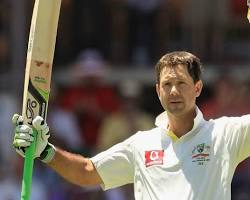
Ricky Thomas Ponting was born on December 19, 1974, in Launceston, Tasmania. Cricket was in his blood; his father, Graeme Ponting, was a talented club cricketer, and Ricky showed exceptional promise from a very young age. By his teenage years, it was clear that he was destined for higher honors.
Ponting’s early success came in junior cricket, where his aggressive batting style and natural hand-eye coordination stood out. He made his first-class debut for Tasmania in the 1992–93 season at just 17 years old. Not long after, he represented Australia at the 1995 Under-19 World Cup, captaining the side and finishing as the tournament’s leading run-scorer. This performance firmly placed him on the national selectors’ radar.
3. International Debut and Early Challenges
Ricky Ponting made his One Day International (ODI) debut for Australia against South Africa in January 1995. Later that year, he made his Test debut against Sri Lanka in Colombo. While his ODI career took off relatively quickly, his early Test career was more challenging.
Ponting struggled initially to convert his undoubted talent into consistent Test performances. He was in and out of the Test side during the mid-1990s, battling issues with shot selection and temperament. However, Australian selectors remained patient, recognizing his immense potential. A key turning point came during the 1997 Ashes tour of England, where Ponting scored a century at Old Trafford. This innings announced his arrival as a serious Test cricketer.
Ricky Ponting: The Playing Career of an Australian Cricket Legend…
4. Establishing Himself as a World-Class Batter

From the late 1990s onward, Ricky Ponting became the backbone of Australia’s batting lineup. Batting primarily at number three, he combined classical technique with aggressive stroke play, particularly against fast bowling. His pull shot became one of the most feared in cricket.
Ponting’s ability to score heavily across all conditions set him apart. He dominated attacks at home on fast, bouncy pitches and proved equally effective overseas, scoring centuries in England, India, South Africa, and the West Indies. By the early 2000s, he was widely regarded as one of the best batters in the world.
In 2003, Ponting reached the pinnacle of individual recognition when he was ranked the number one Test batter in the world—a position he held multiple times throughout his career.
5. World Cup Glory and ODI Dominance
While Ponting’s Test record is exceptional, his impact on One Day International cricket is equally significant. He was a key member of Australia’s World Cup-winning squads in 1999, 2003, and 2007.
The 2003 World Cup final against India remains one of the defining moments of his career. As captain, Ponting played a breathtaking innings of 140* off 121 balls, dismantling a formidable Indian bowling attack. His innings set the tone for Australia’s emphatic victory and is often cited as one of the greatest performances in World Cup history.
Ponting’s ODI career was marked by consistency and longevity. He finished with over 13,000 ODI runs, including 30 centuries, making him one of the format’s all-time greats. …
6. Captaincy and the Golden Era of Australian Cricket
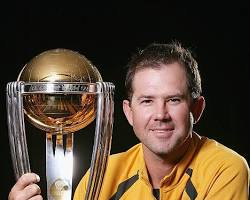
Ricky Ponting took over the Australian captaincy in 2002, succeeding Steve Waugh. He inherited a strong team but also faced the challenge of maintaining Australia’s dominance across formats. Ponting not only met expectations but also exceeded them.
Under his leadership, Australia achieved unprecedented success. The team won back-to-back World Cups in 2003 and 2007, dominated Test cricket, and held the number one ranking for the majority of his captaincy tenure. Ponting’s leadership style was intense and uncompromising; he demanded high standards and led by example with the bat and in the field.
As a captain, Ponting oversaw 48 Test victories, making him one of the most successful Test captains in history. His teams were known for their ruthless approach, mental toughness, and winning mentality.
7. Fielding Excellence
In addition to his batting and leadership, Ricky Ponting was one of the finest fielders of his generation. Renowned for his athleticism, sharp reflexes, and powerful throwing arm, he redefined fielding standards in Australian cricket.
Often stationed at backward point or cover, Ponting saved countless runs and effected spectacular run-outs. His commitment in the field reflected his overall approach to the game—relentless, focused, and professional.
8. Later Years and Career Milestones
As Ponting moved into the latter stages of his career, the Australian team began to undergo a period of transition. The retirements of players like Shane Warne, Glenn McGrath, and Adam Gilchrist marked the end of an era. Ponting faced increased scrutiny as results became more inconsistent.
Despite these challenges, Ponting continued to achieve significant personal milestones. In 2010, he surpassed Allan Border’s record to become Australia’s highest Test run-scorer at the time. He also joined the elite club of players to score over 13,000 runs in Test cricket.
Ponting stepped down as captain in 2011, passing the baton to Michael Clarke. He continued to play as a senior batter before retiring from international cricket in December 2012, following a Test series against South Africa.
Career Statistics and Legacy
By the time he retired, Ricky Ponting had compiled one of the most impressive statistical records in cricket history. He finished his career with over 27,000 international runs, including 71 international centuries. In Test cricket alone, he scored 13,378 runs at an average above 51, placing him among the greatest batters the game has known.
However, Ponting’s legacy goes beyond numbers. He symbolized Australia’s dominance during one of the most successful periods in cricket history. His competitive spirit, tactical acumen, and unwavering commitment to excellence left a lasting impact on teammates and opponents alike.
Conclusion
Ricky Ponting’s playing career is a story of talent, resilience, leadership, and sustained excellence. From a gifted teenager in Tasmania to a global cricket icon, he set standards that future generations aspire to match. Whether remembered for his devastating pull shots, his fierce on-field presence, or his success as captain, Ponting’s place in cricket history is secure.